Saturday, February 12, 2011

crystul skulls contd...


The British Crystal Skull and the Paris Crystal Skull

There is a pair of similar skulls known as the British Crystal Skull and the Paris Crystal Skull. Both are said to have been bought by mercenaries in Mexico in the 1890s, possibly at the same time.
They are so similar in size and shape that some have guessed that one was copied to produce the other. In comparison to the Mitchell-Hedges skull, they are made of cloudier clear crystal and are not nearly as finely sculpted. The features are superficially etched and appear incomplete, without discretely formed jawbones. The British Crystal Skull is on display at London's Museum of Mankind, and the Trocadero Museum of Paris houses the Paris Crystal Skull.
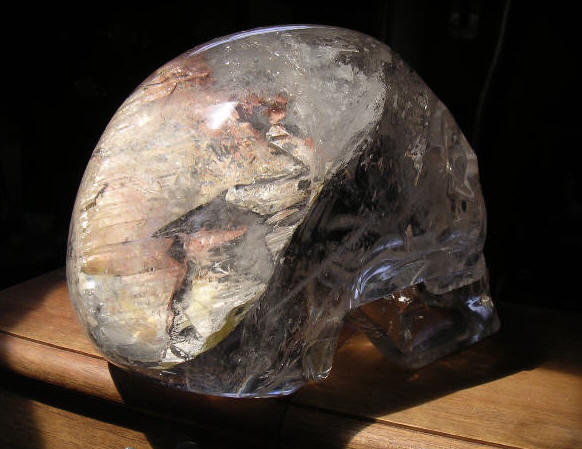
The British Crystal Skull.  It is currently residing in the British Museum of Man in London, England,
and has been there since 1898. It is a one piece clear quartz full size quartz crystal skull.


The British Crystal Skull.  It is currently residing in the British Museum of Man in London, England,
and has been there since 1898. It is a one piece clear quartz full size quartz crystal skull.


The Paris Crystal Skull It  is currently residing in the Trocadero Museum in Paris, France.
You may notice a slight indentation on the top, which is a hole that was cut into the skull purported to hold a cross

.


Mayan Crystal Skull and the Amethyst Skull

Further examples of primitively sculpted skulls are a couple called the Mayan Crystal Skull and the Amethyst Skull. They were discovered in the early 1900s in Guatemala and Mexico, respectively, and were brought to the U.S. by a Mayan priest. The Amethyst Skull is made of purple quartz and the Mayan skull is clear, but the two are otherwise very alike. Like the Mitchell-Hedges skull, both of them were studied at Hewlett-Packard, and they too were found to be inexplicably cut against the axis of the crystal.


Texas Crystal Skull (Max)

A skull known as "Max," or the Texas Crystal Skull, is a single-piece, clear skull weighing 18 pounds. It reportedly originated in Guatemala, then passed from a Tibetan spiritualist to JoAnn Parks of Houston, Texas. The Parks family allows visitors to observe Max and they display the skull at various exhibitions across the U.S.

ET Skull

"ET" is a smoky quartz skull found in the early 20th Century in Central America. It was given its nickname because its pointed cranium and exaggerated overbite make it look like the skull of an alien being. ET is part of the private collection of Joke Van Dietan, who tours with her skulls to share the healing powers she believes they possess.

Rose Quartz Crystal Skull

The only known crystal skull that comes close to resembling the Mitchell-Hedges skull is one called the Rose Quartz Crystal Skull, which was reported near the border of Honduras and Guatemala. It is not clear in color and is slightly larger than the Mitchell-Hedges, but boasts a comparable level of craftsmanship, including a removable mandible.

Brazilian Crystal Skull

This 13.8 pound life-size skull was donated to the museum's Section of Minerals by a Brazilian gem dealer in 2004

"Compassion" - Atlantean Crystal Skull

A newly discovered Crystal skull that rivals the Mitchell Hedges Skull. Atlantean is what Maya Shaman and elder Hunbatz Men said when he first examined it at the crystal skull conference on 9/9/9.

This skull was in a warehouse in Africa for 22 years and then 7 years in storage in an import store. I found it 11 months ago today. It is human size and it has the removable jaw. It is the same dimensions as the Mitchell Hedges Skull with some added features


Below: This view is of an Iron Oxide Occlusion between two of the 3 total layers on skull

When examined by a Dr. Minch, 20 year head of Geology dept. at the Natural History Museum in Santa Barbara showed how the front teeth or Maxilla angles to it's right! He felt this was one example of a hand carved Skull. "A machine made skull would have been straight."

This skull is now available for inspection in California

crystul skulls contd...

Famous Crystal Skulls

This report examines the known history of crystal skulls, various viewpoints on where they might have came from, and the secrets they may revea

The Mitchell-Hedges Crystal Skull

The most widely celebrated and mysterious crystal skull is the Mitchell-Hedges Skull, for at least two good reasons. First, it is very similar in form to an actual human skull, even featuring a fitted removable jawbone. Most known crystal skulls are of a more stylized structure, often with unrealistic features and teeth that are simply etched onto a single skull piece.
Second, it is impossible to say how the Mitchell-Hedges skull was constructed. From a technical standpoint, it appears to be an impossible object which today's most talented sculptors and engineers would be unable to duplicate.


The Anna Mitchell-Hedges Skull
was discovered in British Honduras in 1927

The discovery of this baffling artifact is a controversial matter. It was brought into prominence by British explorer F. A. Mitchell-Hedges, who claimed that his daughter unearthed it in 1924. Mitchell-Hedges led an expedition in the ancient Mayan ruins of Lubaantun, in Belize (then British Honduras), searching for evidence of Atlantis.
The story goes that his daughter, Anna, was rummaging inside a structure believed to have once been a temple, when she found the beautifully carved cranium of the crystal skull. It was lacking its jawbone, but the matching mandible was found three months later, some 25 feet away from the first discovery. Mitchell-Hedges claimed that he refused to take the skull away, and offered it to the local priests, but the Mayans gave the skull back to him as a gift upon his departure.
It now appears that this tale of the skull's discovery was entirely fabricated. Mitchell-Hedges apparently purchased the skull at an auction at Sothebys in London, in 1943. This has been verified by documents at the British Museum, which had bid against Mitchell-Hedges for the crystal artifact.
This revelation is consistent with the known history of Mitchell-Hedges's involvement with the skull. There are no photographs of the skull among those that were taken during his Lubaatun expedition, and there is no documentation of Mitchell-Hedges displaying or even acknowledging the skull prior to 1943.
The skull remains in the possession of the octogenarian Anna Mitchell-Hedges. She resides in Canada and displays the skull on frequent tours. Anna has maintained for all these years that she discovered the skull, even though there is reason to doubt that she was present at the Lubaatun expedition at all.
The Mitchell-Hedges skull is made of clear quartz crystal, and both cranium and mandible are believed to have come from the same solid block. It weighs 11.7 pounds and is about five inches high, five inches wide, and seven inches long. Except for slight anomalies in the temples and cheekbones, it is a virtually anatomically correct replica of a human skull. Because of its small size and other characteristics, it is thought more closely to resemble a female skull -- and this has led some to refer to the Mitchell-Hedges skull as a "she."
The Mitchell-Hedges family loaned the skull to Hewlett-Packard Laboratories for extensive study in 1970. Art restorer Frank Dorland oversaw the testing at the Santa Clara, California, computer equipment manufacturer, a leading facility for crystal research. The HP examinations yielded some startling results.
Researchers found that the skull had been carved against the natural axis of the crystal. Modern crystal sculptors always take into account the axis, or orientation of the crystal's molecular symmetry, because if they carve "against the grain," the piece is bound to shatter -- even with the use of lasers and other high-tech cutting methods.

To compound the strangeness, HP could find no microscopic scratches on the crystal which would indicate it had been carved with metal instruments. Dorland's best hypothesis for the skull's construction is that it was roughly hewn out with diamonds, and then the detail work was meticulously done with a gentle solution of silicon sand and water. The exhausting job -- assuming it could possibly be done in this way -- would have required man-hours adding up to 300 years to complete.
Under these circumstances, experts believe that successfully crafting a shape as complex as the Mitchell-Hedges skull is impossible; as one HP researcher is said to have remarked, "The damned thing simply shouldn't be."

crystul skulls

STRANGE ARTIFACTS - Crystal Skulls

Introduction

Skulls are humanity's foremost symbol of death, and a powerful icon in the visual vocabularies of cultures all over the globe. Thirteen crystal skulls of apparently ancient origin have been found in parts of Mexico, Central America and South America, comprising one of the most fascinating subjects of 20th Century archaeology
These skulls, found near the ancient ruins of Mayan and Aztec civilizations (with some evidence linking the skulls with past civilization in Peru) are a mystery as profound as the Pyramids of Egypt, the Nazca Lines of Peru, or Stonehenge. Some of the skulls are believed to be between 5,000 and 36,000 years old.
Many indigenous people speak of their remarkable magical and healing properties, but nobody really knows where they came from or what they were used for. 
Were they left behind after the destruction of a previous world, such as Atlantis? Are they simply ingenious modern fakes or can they really enable us to see deeply into the past and predict the future? 
Much research is currently being done on the skulls. However, their origin is still a baffling mystery. They seem to defy logic. Everything that is known about lapidary work indicates that the skulls should have been shattered fractured, or fallen apart when carved.

Friday, February 11, 2011

ಧರ್ಮಶಾಲ ಕ್ರಿಕೆಟ್

 
HPCA Stadium Stadium (Himachal Pradesh Cricket Association Stadium) is a cricket stadium located in the city of Dharamsala in Himachal Pradesh. The stadium is home to Himachal Pradesh cricket team and hosts all of Himachal's Pradesh Ranji Trophy matches and other limited overs matches. The stadium has also been chosen to host two IPL matches as the home stadium of Kings XI Punjab, and is having floodlights installed for this reason.[1][2]
The ground could host international cricket in the future, after it was recommended by Dav Whatmore, the former Director of the Indian National Cricket Academy and current coach of theKolkata Knight Riders.[3]
The venue is unique in India as it is situated at a height of 1,457 m (4,780 ft 2 in) above sea level and has snow capped mountains in the backdrop. The first international team that played here was the Pakistan national cricket team, that played a tour match against an Indian Board President's XI in 2005.
The weather in Dharamshala provides a perfect condition to host an international cricket match. The best time for cricket season is from March-June and from September-December.The breeze coming directly from the mountains will help the seam bowlers.
Just behind the stadium is Govt. College of Dharamshala which was built during the British Empire.

Wednesday, February 2, 2011

ayodya tirpina satyamshgalu


ಅರವತ್ತು ವರ್ಷಗಳಿಂದ ನ್ಯಾಯಾಲಯದ ಒಳಗೆ ಮತ್ತು ಹೊರಗೆ ಹಿಂದೂ ಮುಸ್ಲಿಂ ಸಂಘರ್ಷಕ್ಕೆ ಕಾರಣವಾಗಿದ್ದ ಅಯೋಧ್ಯೆಯ ಭೂಹಕ್ಕಿನ ಪ್ರಕರಣದಲ್ಲಿ ಸೆಪ್ಟೆಂಬರ್ 30ರಂದು ಅಲಹಾಬಾದ್ ಹೈಕೋರ್ಟ್ [^] ನಿಂದ ಐತಿಹಾಸಿಕ ತೀರ್ಪು ಹೊರಬಂದಿದೆ. ಹಿಂದೂ ಮಹಾಸಭಾ, ಸುನ್ನಿ ವಕ್ಫ್ ಮಂಡಳಿ ಮತ್ತು ನಿರ್ಮೋಹಿ ಅಖಾಡಗಳಿಗೆ ವಿವಾದಿತ ಭೂಮಿಯನ್ನು ಮೂರು ಭಾಗಗಳಾಗಿ ಹಂಚಿ ನ್ಯಾಯಾಲಯ ಸಂಘರ್ಷಕ್ಕೆ ಒಂದು ತಾತ್ಕಾಲಿಕ ತಡೆ ತಂದಿದೆ.

ಈಗಿರುವ ರಾಮಲಲ್ಲಾ ಸ್ಥಳದಲ್ಲೇ ರಾಮ ಜನ್ಮಿಸಿದ್ದು, ರಾಮ ಮಂದಿರ ಕಟ್ಟಲು ಅಡ್ಡಿಯಿಲ್ಲ ಎಂದು ನ್ಯಾಯಾಲಯ ಹೇಳಿ ಹಿಂದೂಗಳಲ್ಲಿ ಹರ್ಷ ತಂದಿದ್ದರೆ, ತೀರ್ಪಿಗೆ ಅಸಮಾಧಾನ ವ್ಯಕ್ತಪಡಿಸಿರುವ ವಕ್ಫ್ ಸಮಿತಿ ಸುಪ್ರೀಂ ಕೋರ್ಟಿನ ಮೆಟ್ಟಿಲೇರುವುದಾಗಿ ಹೇಳಿದೆ. ಮುಂದೇನಾಗುತ್ತೋ ಏನೋ, ಆದರೆ ಸದ್ಯಕ್ಕಂತೂ ಕೋಮು ಗಲಭೆಯ ಹೆದರಿಕೆಯಲ್ಲಿ ಥರಗುಟ್ಟುತ್ತಿದ್ದ ಇಡೀ ದೇಶ ನಿರಾತಂಕದ ನಿಟ್ಟುಸಿರು ಬಿಟ್ಟಿದೆ. ಇದಕ್ಕೆ ಕಾರಣರಾದವರು ಅಲಹಾಬಾದ್ ಹೈಕೋರ್ಟಿನ ವಿಭಾಗೀಯ ಪೀಠದ ಸದಸ್ಯರಾದ ನ್ಯಾಯಮೂರ್ತಿ ಸಿಬಘತ್ ಉಲ್ಲಾ ಖಾನ್, ನ್ಯಾ. ಧರಂ ವೀರ್ ಶರ್ಮಾ ಮತ್ತು ನ್ಯಾ. ಸುಧೀರ್ ಅಗರವಾಲ್. ಇವರಲ್ಲಿ ನ್ಯಾ. ಶರ್ಮಾ ಇಂದು ನಿವೃತ್ತರಾಗುತ್ತಿದ್ದಾರೆ.

ವಿವಾದಿತ ಭೂಮಿಯಲ್ಲಿ ರಾಮ ಜನಿಸಿದ್ದನಾ, ಮಂದಿರದ ಮೇಲೆ ಮಸೀದಿ [^] ಕಟ್ಟಿದ್ದರಾ, ವಿವಾದಿತ ಕಟ್ಟಡ ಮಸೀದಿಯಾ, ಭೂಮಿ ಹಿಂದೂಗಳಿಗೆ ಸೇರಬೇಕಾ, ಮುಸ್ಲಿಂರಿಗೆ ಸೇರಬೇಕಾ ಎಂಬಿತ್ಯಾದಿ ಪ್ರಶ್ನೆಗಳನ್ನು ಈ ಪ್ರಕರಣ ಹುಟ್ಟುಹಾಕಿತ್ತು. ಇವೆಲ್ಲ ಪ್ರಶ್ನೆಗಳಿಗೆ ನ್ಯಾಯಮೂರ್ತಿಗಳು ಏನು ಹೇಳಿದ್ದಾರೆ, ಯಾವ್ಯಾವ ಸತ್ಯಾಂಶಗಳನ್ನು ಕಂಡುಕೊಂಡಿದ್ದಾರೆ, ಯಾವ ಪ್ರಶ್ನೆಗಳು ಪ್ರಶ್ನೆಗಳಾಗಿಯೇ ಉಳಿದಿವೆಯಾ ಎಂಬ ವಿವರಗಳು ಮೂವರೂ ನ್ಯಾಯಮೂರ್ತಿಗಳು ನೀಡಿರುವ ತೀರ್ಪಿನ ವಿವರಗಳಲ್ಲಿವೆ. ಆಸಕ್ತರು ಈ ವಿವರಗಳನ್ನು ಓದಬಹುದು. ಅವು ಕೆಳಗಿನಂತಿವೆ.

* ನ್ಯಾಯಮೂರ್ತಿ ಧರಂ ವೀರ್ ಶರ್ಮಾ ಅವರು ನೀಡಿದ ತೀರ್ಪಿನ ವಿವರ
* ನ್ಯಾಯಮೂರ್ತಿ ಸಿಬಘತ್ ಉಲ್ಲಾ ಖಾನ್ ಅವರು ನೀಡಿದ ತೀರ್ಪಿನ ವಿವರ
* ನ್ಯಾಯಮೂರ್ತಿ ಸುಧೀರ್ ಅಗರವಾಲ್ ಅವರು ನೀಡಿದ ತೀರ್ಪಿನ ವಿವರ
ರಾಜಕಾರಣಿಗಳಿದ್ದ ಬಸ್ ರೆಸಾರ್ಟ್ಗೆ ಹೋಗುತ್ತಿತ್ತು ಮಾರ್ಗ ಮದ್ಯದಲ್ಲಿ ನಿಯತ್ರಣ
ತಪ್ಪಿ ಕಾಲುವೆಗೆ ಹಾರಿತು ..ಪಕ್ಕದ ಹಳ್ಳಿ ಜನ ಬಂದು ಅವರ್ನೆಲ್ಲ ಮಣ್ಣು ಮಾಡ್ಬಿಟ್ರು .
....ಮಾರನೇ ದಿನ ಪೋಲಿಸ್ ತನಿಕೆ .....
ಹಳ್ಳಿಗರು:ಸಾಮಿ ಹಳ್ಳಕ್ಕೆ ಬಿದ್ದಾಗ ನಾವು ಸತ್ತಿಲ್ಲ ಸತ್ತಿಲ್ಲ ಅಂತಾ ವಾದ ಮಾಡಿದ್ರು ಸಾಮಿ ...ನಾವು ನಮ್ಬ್ತೆವ ರಾಜಕಾರಣಿಗಳ ಮಾತನ್ನ....